Most climate VCs spend months chasing cold leads and waiting for referrals. Meanwhile, the best firms are building content distribution systems that make startups come to them daily.
Here’s exactly how smart climate funds are using systematic content strategy VC deal flow to attract better opportunities, build founder trust, and close deals faster.
Why Traditional VC Deal Flow Strategies Miss Climate Opportunities
The old VC playbook doesn’t work for climate tech. Traditional deal sourcing relies on warm introductions and industry events. But climate founders are different.
They’re building in emerging categories. They’re creating solutions that didn’t exist five years ago. They’re not connected to the Sand Hill Road network.
According to Carta’s analysis of deal flow processes, most VCs still depend on referrals for 70% of their opportunities. That works for SaaS. It fails for climate tech.
Climate founders research their investors online first. They read your content before they take meetings. They want to work with VCs who understand their mission.
That’s why the smartest climate VCs are building content strategy VC deal flow systems. They’re creating content that attracts founders instead of chasing them.
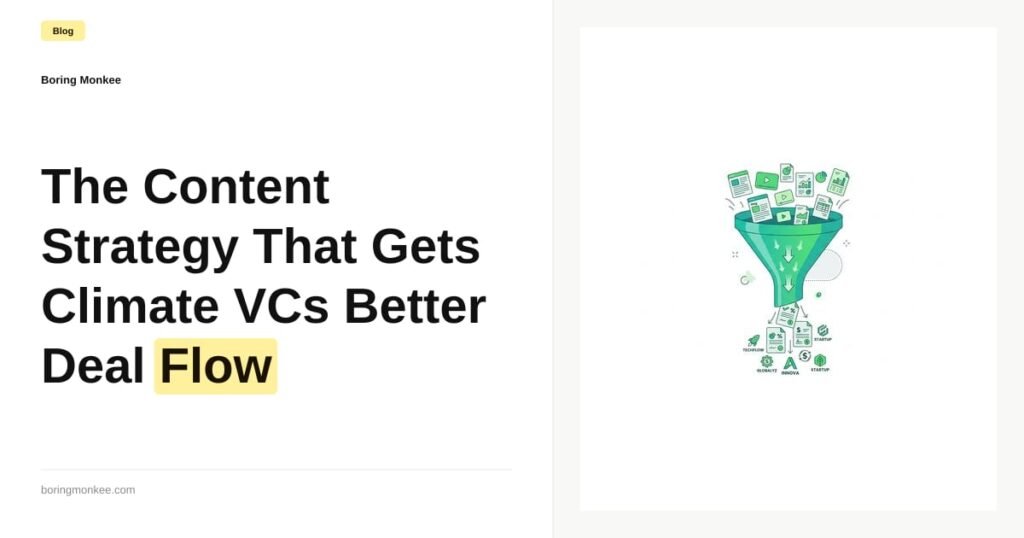
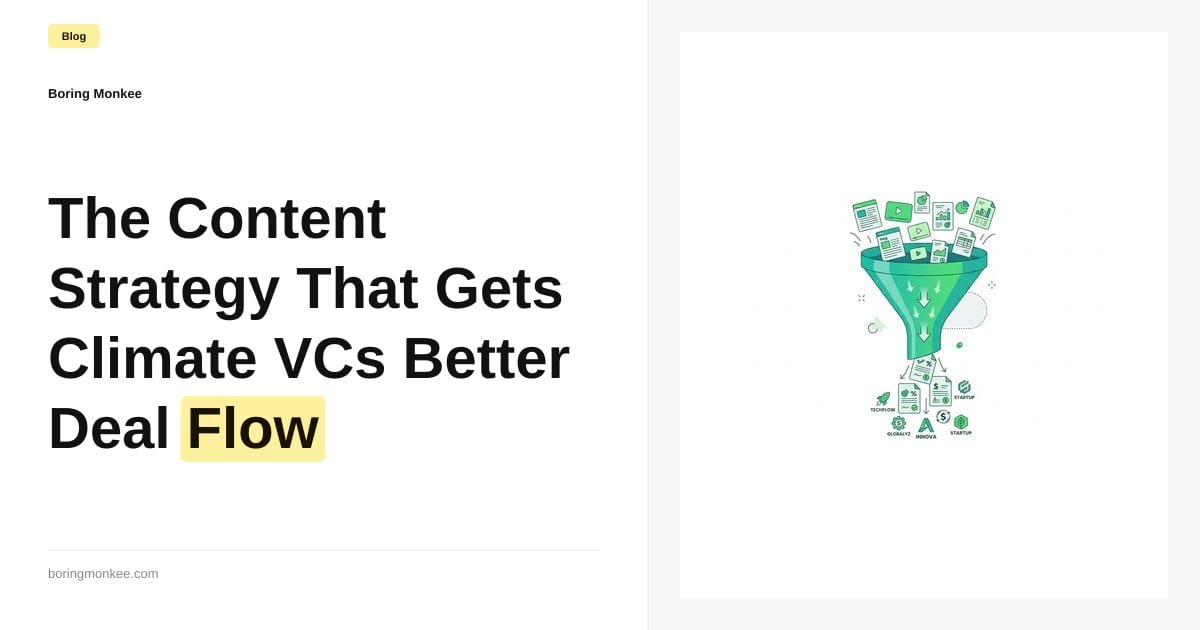
The Content Distribution System Smart Climate VCs Use
Here’s what winning climate VCs do differently. They don’t just publish occasional thought leadership posts. They build systematic content distribution that works 24/7.
First, they create daily content across every platform. LinkedIn, Twitter, newsletters, podcasts, video series. Every single day. No exceptions.
Second, they build creator armies. Not just the managing partner posting twice a week. Teams of 5-10 people creating content daily about climate trends, startup advice, and investment insights.
Third, they own their distribution. They don’t depend on PR agencies or influencer partnerships. They control the entire system from content creation to audience building.
This approach mirrors how B2B brands use AI-powered content strategies to scale their messaging across multiple channels simultaneously.
Platform-Specific VC Content That Converts
Each platform serves a different purpose in your content strategy VC deal flow system. LinkedIn builds credibility with institutional partners. Twitter connects you with technical founders. Newsletters nurture long-term relationships.
Smart VCs publish investment thesis content on LinkedIn. They share quick climate tech insights on Twitter. They send detailed market analysis through newsletters.
The key is consistency across all channels. Same investment philosophy. Same expertise. Different formats for different audiences.
Content Types That Attract Climate Founders
Climate founders don’t want generic VC content. They want expertise that shows you understand their specific challenges.
Market analysis posts work best. Break down regulatory changes, technology trends, and competitive landscapes. Show founders you’re tracking the same market dynamics they face daily.
Startup advice content builds trust. Write about fundraising strategies, hiring challenges, and go-to-market approaches specific to climate tech. Help founders before you invest in them.
Portfolio company showcases demonstrate your value-add. Share how you helped startups navigate specific challenges. Show results without revealing sensitive information.
Investment philosophy content attracts aligned founders. Explain what you look for, why you focus on climate, and how you evaluate opportunities. Be specific about your criteria.
This content strategy approach aligns with how sustainability brands use data-driven communication to build credibility with their target audiences.
How to Build Your VC Content Distribution System
Building effective content strategy VC deal flow requires systematic execution. Start with content planning that matches your investment focus.
Create content calendars around climate tech sectors you target. Plan series around solar, energy storage, carbon capture, or sustainable agriculture. Become the definitive voice in your focus areas.
Develop content creation workflows. Use AI tools to scale content production. Create templates for market analysis, portfolio updates, and founder advice posts.
Build distribution processes across all platforms. Don’t just post on LinkedIn. Share insights on Twitter, send newsletters, record podcasts, and create video content.
Track engagement from potential deal sources. Monitor which content attracts inbound inquiries. Double down on formats that generate founder conversations.
Content Calendar Framework for Climate VCs
Monday market analysis posts. Wednesday portfolio company features. Friday founder advice content. This rhythm creates predictable value for your audience.
Seasonal content works well too. Q4 fundraising advice. New year investment predictions. Climate week event coverage. Match your content to industry cycles.
Breaking news commentary positions you as a thought leader. React quickly to policy changes, technology breakthroughs, and market shifts. Be first with smart analysis.
Measuring Content Strategy VC Deal Flow Success
Track metrics that matter for deal sourcing. Don’t just measure likes and shares. Focus on inbound inquiries, founder meetings, and deal quality.
Monitor direct founder outreach generated by content. Track pitch deck submissions that reference your posts or videos. Measure meeting requests from your target founder profiles.
Analyze content performance by topic. Which market analysis posts generate the most founder engagement? What advice content drives the most inbound messages?
According to research on VCs using newsletters for deal flow, funds that publish regularly see 3x more inbound founder inquiries than those that don’t.
Track deal flow quality improvements. Are content-driven leads better qualified? Do they align better with your investment thesis? Do they close faster?
This measurement approach follows proven frameworks for fixing content that doesn’t convert into actual business results.
Common Mistakes Climate VCs Make with Content
Most climate VCs publish sporadically. They write one thought leadership post per month and expect results. That doesn’t work in 2024.
They focus on the wrong platforms. They post only on LinkedIn because it’s “professional.” But climate founders are everywhere. Twitter, podcasts, industry newsletters, technical forums.
They write generic VC content. Market size discussions that could apply to any sector. Investment process explanations that every VC publishes. No differentiation.
They don’t engage with founder content. They publish their own posts but ignore founder discussions. Miss opportunities to add value to conversations.
They outsource content to agencies who don’t understand climate tech. Generic marketing content that shows no domain expertise. Founders see through this immediately.
Advanced VC Content Distribution Tactics
Smart climate VCs use AI clone videos to scale their personal brand. Record once, distribute everywhere. Appear on podcasts, webinars, and social media without additional time investment.
They build email lists of climate founders, not just LPs. Send weekly market insights directly to entrepreneurs. Build relationships before fundraising cycles begin.
They create educational content series. Multi-part guides on climate tech fundraising, regulatory compliance, or technology development. Become the educational resource founders bookmark.
They collaborate with portfolio companies on content. Co-create market analysis, technology explainers, and industry trend reports. Leverage portfolio expertise while showcasing your network.
This systematic approach mirrors how sustainable brands build comprehensive digital marketing strategies that work across multiple channels.
Ready to Fix Your Content Strategy?
Most climate VCs will keep waiting for deal flow to find them. Smart ones build systems that attract the best founders daily. Book a free strategy call to learn how we help climate VCs build content distribution systems that generate consistent, high-quality deal flow.
Frequently Asked Questions
How long does it take to see results from VC content marketing?
Consistent daily content typically generates first inbound founder inquiries within 30-60 days. Quality deal flow usually develops after 3-6 months of systematic publishing. The key is consistency across all platforms, not sporadic high-quality posts.
Should climate VCs focus on LinkedIn or diversify across platforms?
Diversification wins every time. Climate founders use Twitter for technical discussions, LinkedIn for professional networking, newsletters for deep insights, and podcasts for learning. Being everywhere increases your chances of connecting with the right founders at the right time.
What content topics generate the most founder interest for climate VCs?
Market analysis and regulatory updates perform best, followed by specific fundraising advice for climate startups. Founders want investors who understand their unique challenges like long development cycles, regulatory hurdles, and technology risks. Generic VC advice doesn’t work.
How much time should VC partners spend on content creation?
Smart VCs build systems that minimize time investment while maximizing output. AI tools, content templates, and creator teams can reduce partner time to 30 minutes daily while maintaining consistent multi-platform presence. The goal is systematic content, not more work.
Does VC content marketing work for early-stage climate funds?
Content works especially well for new climate funds because it builds credibility faster than traditional networking. Early-stage funds can demonstrate expertise and investment thesis through content before they have extensive portfolio track records. Consistency matters more than fund size.
How do you measure ROI on VC content marketing investments?
Track inbound founder inquiries, meeting requests from target companies, and deal flow quality improvements. The best metric is qualified opportunities per month generated through content channels. Also monitor time-to-close for content-driven deals versus traditional sourcing.
Can smaller climate VCs compete with larger funds through content?
Content levels the playing field significantly. Smaller funds can build stronger founder relationships through consistent, helpful content than larger funds with sporadic publishing. Founders care more about expertise and alignment than fund size when choosing investors.